
Est. reading time: 3 minutes
If you import products regulated by the Consumer Product Safety Commission (CPSC), here’s the headline: as of July 8, 2026, certificate data has to be filed electronically, up front, at the time of entry. What’s required of you hasn’t changed, but how and when you file it has.
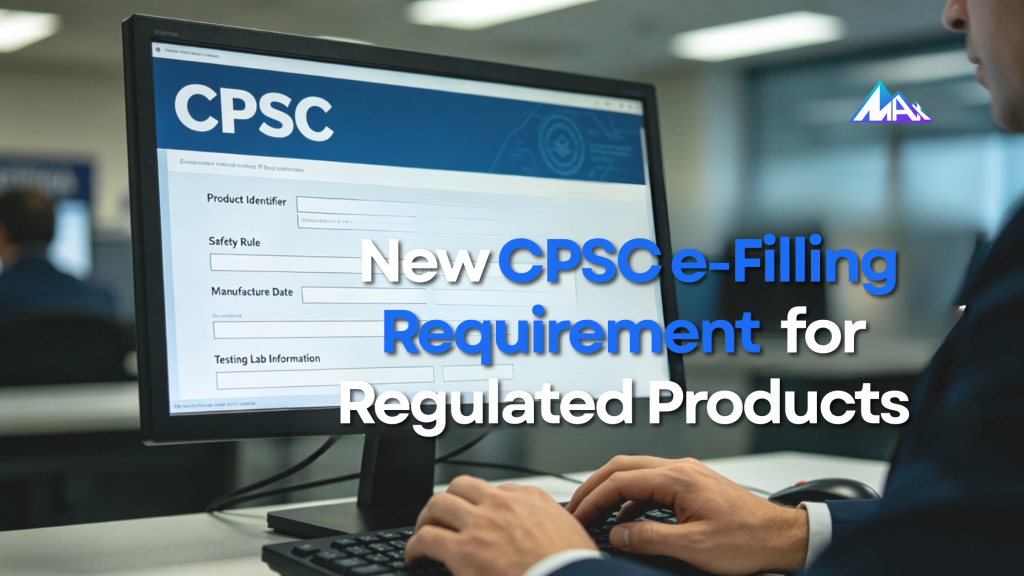
The certification itself isn’t new. Importers and manufacturers of CPSC-regulated products have been required to hold a Certificate of Compliance since 2008. What changed with this new rule, is that the required certificate data elements. Things like product identifier, the specific safety rule you’re certifying against, manufacture date, and testing lab information, now have to reach U.S. Customs and Border Protection electronically through the CPSC’s Partner Government Agency (PGA) Message Set in ACE, instead of just sitting in a file you produce if asked.
Two Ways to File
| Method | How It Works |
| Full PGA Message Set | All seven certificate data elements are submitted directly through ACE with every entry |
| Reference PGA Message Set | Certificate data is entered once into CPSC’s Product Registry; a reference ID is transmitted through ACE instead — useful for repeat imports under the same certificate |
Which Products This Applies To
The products affected haven’t changed. This covers the same categories that were previously required to carry a GCC or CPC:
- CPC (Children’s Product Certificate): toys, cribs, car seats, children’s furniture, pacifiers, apparel.
- GCC (General Certificate of Conformity): general-use consumer products, including upholstered furniture flammability, electrical and lighting products, ATVs, lawn and garden equipment, carpets and rugs, and certain textiles.
What Enforcement Looks Like Right Now
CPSC has said it does not currently intend to have ACE reject entries outright for a missing eFiled certificate. It’s issuing warning messages instead, at least for now. But that doesn’t mean there’s no consequence. Incomplete or missing filings raise your shipment’s risk score, which means a higher chance of holds, exams, and requests for additional documentation. CPSC can also still pursue seizure of non-compliant goods separately from the ACE filing process.
One detail worth flagging: a testing exemption doesn’t eliminate the certificate requirement. If your product qualifies for a testing exclusion, you still need to issue a certificate that cites the applicable rule and names the exemption. “exempt” doesn’t mean “nothing to file.”
There’s also a later deadline for a specific scenario: products entering a Foreign Trade Zone and later withdrawn for consumption or warehousing get until January 8, 2027 before eFiling becomes mandatory for them.
Why This Is Worth Confirming Now
A missing or improperly filed e-certificate raises your shipment’s risk profile with every entry, and CPSC can still pursue non-compliant goods separately.
If you’re importing anything in the categories above, it’s worth confirming your filing process is actually working correctly on your next few shipments, not assuming it is.
MAX is here to help you navigate the shift. Speak with your dedicated agent today.
Quick FAQ
Is there an exemption for low-value or de minimis shipments?
No. eFiling applies to any product requiring CPSC certification regardless of the shipment’s value. There is no Section 321 / de minimis exemption.
What’s the easiest way to file if I import the same products repeatedly?
Register your products in the CPSC Product Registry once, then reference the stored Certificate Identifiers on future shipments through a Reference PGA Message Set. It’s faster than resubmitting all seven data elements on every entry.