
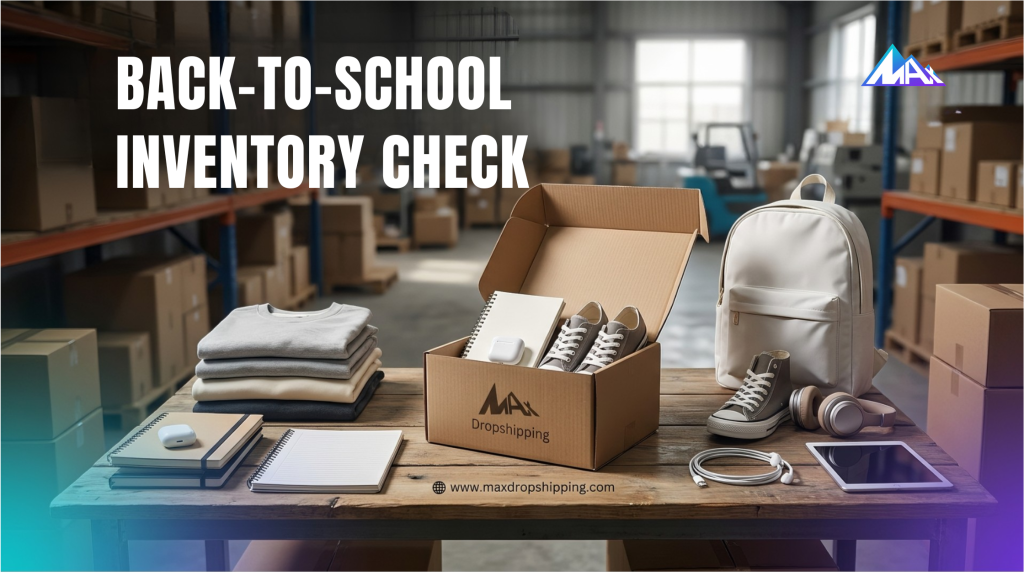
Being out of stock the moment demand peaks is one of the fastest ways to lose sales. Back-to-school is one of the biggest shopping periods of the year for U.S. retail, and the timeline keeps shifting earlier: this year, two-thirds of shoppers (67%) had already begun buying by early July, according to the National Retail Federation’s 2026 survey. The earliest start recorded since NRF began asking the question in 2018. About a third had started as early as June.

Part of that shift is tariff-driven: 51% of families said they’re shopping earlier this year specifically because they expect prices to rise. Total back-to-school spending is projected to reach $43.3 billion, with families spending an average of $858 per K-12 student across clothing, shoes, supplies, and electronics, and online remains the single most popular shopping destination at 55%, ahead of department and discount stores.
None of that leaves much room for a seller who’s still planning to stock up once August hits.
Your July Checklist
- Review inventory levels. Know exactly what you have and where the gaps are before demand exposes them.
- Check supplier lead times. Confirm how long restocks will actually take if you need them mid-season.
- Plan your shipping strategy. Make sure your shipping setup can handle a spike in order volume without slowing down.
- Forecast upcoming demand. Look at last year’s numbers and current trends, especially in electronics and apparel (the two categories carrying the largest share of spend), to estimate what’s coming.
Why Timing Matters
Back-to-school demand spikes fast, and suppliers, carriers, and warehouses all feel that pressure at once. Sellers who prepare in July secure inventory and lead times ahead of the crunch. Sellers who wait are competing for the same limited capacity everyone else needs at the same time, and with more than half of shoppers already past the starting line, “the rush” for a large share of the market has already begun.
Price sensitivity is also shaping how this season plays out. The majority of shoppers expect back-to-school items to cost more this year, and families are responding by comparison shopping more aggressively and leaning on sales and discount retailers to stretch their budget, which makes competitive, clearly communicated pricing as important as having stock on the shelf in the first place.
A stockout during peak season doesn’t just cost the sale you missed — it costs the customer who found the product elsewhere and didn’t come back. A little planning now can prevent a lot of headaches later.
Your dedicated MAX agent can help you check your inventory position ahead of the rush.
Quick FAQ
What categories see the strongest back-to-school demand this year?
Electronics remains the single largest spending category per NRF’s 2026 data, followed by clothing and accessories, then school supplies and shoes. A pattern that’s held steady for the past several years.
Is it too late to prepare if I haven’t started yet?
Not yet, but the window is closing fast. With two-thirds of shoppers already buying, sellers who move on inventory and shipping capacity in the next few weeks still have time to catch the remaining demand; waiting until August means competing for the same limited carrier and supplier capacity everyone else needs at once.