
Est. reading time: 5 minutes
If you sell into Europe, this is worth reading in full rather than skimming. MAX Dropshipping is working directly with logistics providers to track this rollout, with the goal of keeping costs and complexity down on your end as the rule takes effect.
How the Policy Works
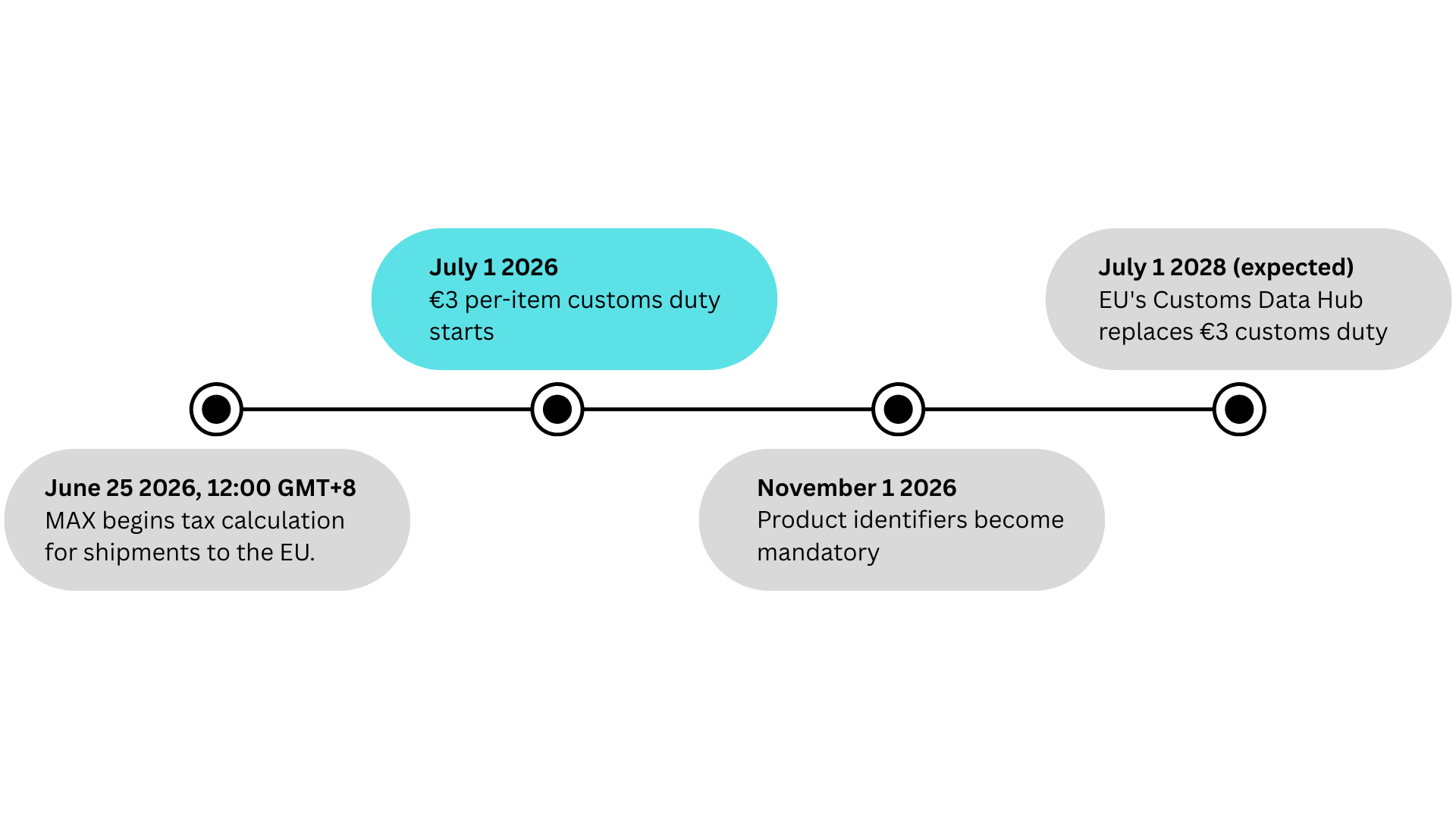
The regulation replaces a long-standing duty exemption that let parcels under €150 enter the EU duty-free. Starting July 1, 2026 at 00:00 EU local time, that exemption ended, and the new €3 flat-rate duty applies to any qualifying parcel from that point on. This is expected to run until around July 1, 2028, when the EU’s broader Customs Data Hub reform is scheduled to take over with standard, good-specific tariff rates.
Because transit time from a MAX warehouse in China to EU customs typically runs 5–7 days, tax calculation begins on the system side from June 25, 2026 at 12:00 GMT+8, to keep everything aligned operationally. If a package ultimately clears EU customs before July 1st, the tax will be refunded.
Your product pricing stays exactly the same. The final total simply reflects product price plus applicable import tax, calculated automatically at checkout.
Which Countries Are Affected
| Affected (27 EU States) | Not Affected |
|
|
Scope and Tax Calculation
The tax applies to all low-value parcels with a declared value of €150 or less shipped to EU destinations. The standard rate is €3 per item — roughly $3.41 at current exchange rates.
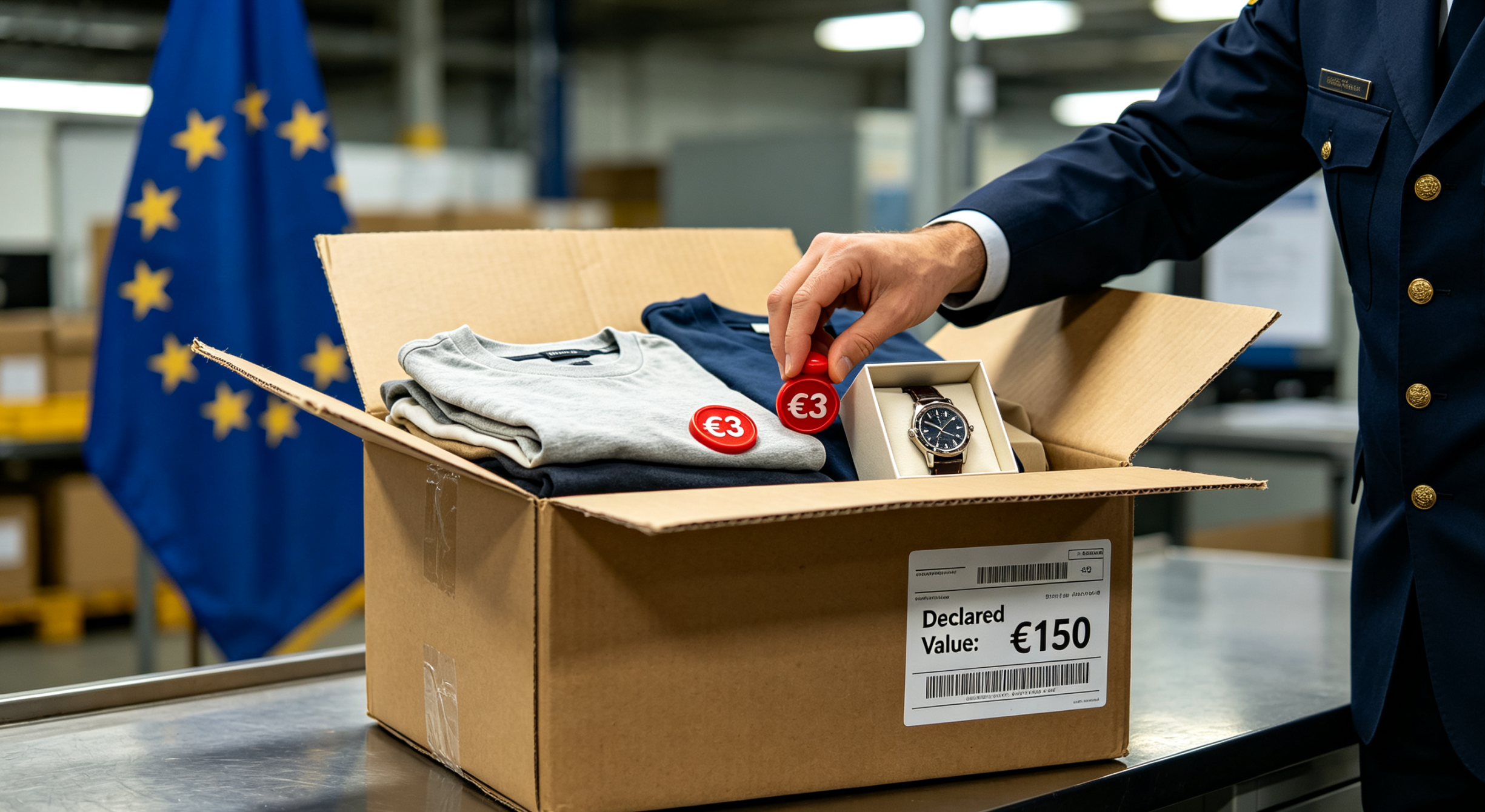
An “item” is defined as one or more units within a parcel that share both the same first six digits of the HS (customs) code and the same declared English product name. Multiple identical products within a single order may be treated as one item under this definition, but a parcel containing genuinely different products — say, T-shirts and a watch — is charged the €3 duty separately for each classification.
A New Data Requirement Is Coming
Starting November 1, 2026, the EU will also require Product Identifiers (PIDs) like SKUs, GTINs, or manufacturer codes on every customs declaration line for imported goods sold to EU consumers. PIDs can be declared voluntarily from July 1, 2026, but they become mandatory that November, as part of the same broader push to improve traceability and screen out unsafe or non-compliant goods. If your product catalog or listings don’t currently carry clean, structured identifiers, that’s worth addressing before the November deadline, not after.
Exemptions
- Customized packaging bags
- Customized packaging boxes
- Thank-you cards
What the €3 Duty Doesn’t Change
It’s worth being clear about what this measure is not. The €3 charge is separate from VAT, which continues to be declared and collected the same way it already was, including through the Import One-Stop Shop (IOSS) where applicable. It’s also distinct from a separate EU-wide handling fee that has been discussed to help cover customs processing costs. That proposal was still under negotiation as of this writing and, if adopted, would apply on top of, not instead of, the €3 duty.
A handful of individual EU countries have also introduced their own national charges ahead of, or alongside, the EU-wide measure. Romania, for example, introduced a separate logistics tax on low-value parcels at the start of 2026. Those national rules sit outside the €3 EU duty and are worth checking separately if you ship heavily into a specific market.
Timeline at a Glance
What This Means for You
This is a standardized, EU-wide adjustment, not something specific to any one platform or business. Three concrete steps are worth taking now:
- Recalculate product costs and adjust retail pricing where needed.
- Review your product data and identifiers ahead of the November PID mandate.
- Keep an eye on further policy updates in case of changes before the 2028 reform takes hold.
Have questions, or need help adjusting your pricing strategy? Reach out to your dedicated MAX agent.
Quick FAQ
Is this the same as the separate EU handling fee I’ve heard about?
No. The €3 duty is a customs charge; a separate EU-wide handling fee to cover customs processing costs has been discussed for late 2026 but is tracked and applied independently of the €3 duty.
Does the €3 duty apply per parcel or per item?
Per item classification (tariff line), not per parcel. Multiple units of the same product in one tariff line count as a single item; different types of products in the same parcel are each charged separately.